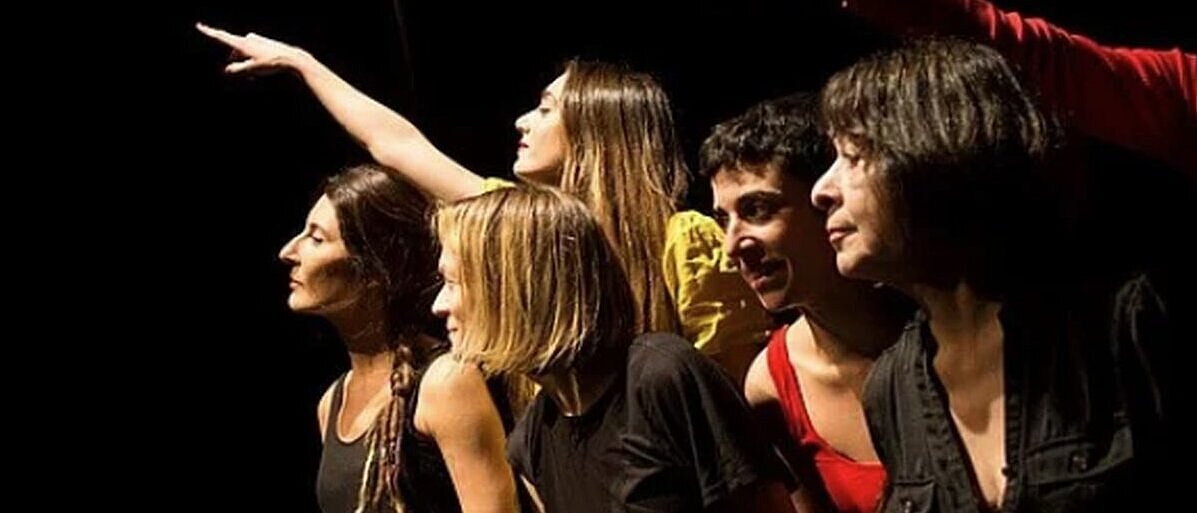
Peace as a Collective Practice
An international training on peace education and civic engagement: A theatrical perspective from collective work, care and community building
We invite young activists, youth workers, educators and youth leaders from across Europe to explore peace as a collective, relational and political practice. This training creates a space to connect with our bodies, biographies and communities, fostering mutual care, empowerment and collective resilience. In a world shaped by conflict, inequality and violence, peace also means reflecting on how we care for one another, sustain ourselves and strengthen community.
As young leaders and educators, our role is not only to resist and raise awareness, but also to create spaces of collective care and support. Peace is understood as an ongoing, shared practice built through collective action. Using embodied, biographical and collective theatre methods, participants transform experiences of fear, exhaustion and resistance into material for reflection and creative expression. Theatre becomes a space for dialogue, encounter and democratic coexistence, grounded in diversity, solidarity and mutual respect.
Date of arrival: July 21, 2026 – in the afternoon
Date of departure: July 28, 2026 – in the morning
Place: Sievershausen / near Hannover / Germany
This International Training is a violence- and discrimination-free space. Diversity is a strength and everyone is welcome. However there are a few things that should be considered:
- You must be 18+
- You should have a good command of English
- You should have some experience in running non-formal youth learning or political education activities
- You are interested in peace, care, anti-discrimination and community building
- You are open to embodied work and collective processes
- You value safe spaces, mutual respect and diversity
- FLINTA* persons are especially encouraged to apply
- Acting & group building: Introduction to the theme, group dynamics and cohesion. What is peace and how do we understand community?
- Biographical Theater: Sharing life experiences and identifying common ground, conflicts and resources through theatre tools.
- Theater of the Oppressed & intersectionality: Reflecting on power, privilege and exclusion, and exploring collective responses.
- Physical Theater & embodied work: Exploring gesture, memory, exhaustion and resistance through the body.
- Collective creation: Developing a shared performative project based on what we have learned together.
- Individual transfer: How to apply these tools and learnings in your own activist, educational or community context.
Lorena Valdenegro is director, physical theater and dance theater actress and theater pedagogue. She holds a degree in performing arts from the Universidad del Desarrollo in Santiago de Chile. In 2016 she founded AQUItheater Berlin, a scenic experimentation laboratory that opens safe and creative spaces that promote empowerment and the acceptance and celebration of the body, as well as the visualization of topics that are taboo in our society.
Ale Acuña Alday is Chilean actress and migrant, Bachelor of Arts in Theater Performance from the Catholic University of Chile, with a specialization in body studies, and Diploma in Art Therapy Fundamentals. Her practice spans theater, dance, and performance. She focuses on artistic expressions that explore identity, territory, and bodily memory, particularly in the context of contemporary female experience.
Curious about the trainer’s work? www.aquitheaterberlin.de
- 1-3 participants per organisation from following regions: EU-Europe, Eastern Europe, Caucasus, Mediterranean regions
- Working language: English
- Accomodation and Costs: ICJA, as Hosting Organization of this offer, will organise the accommodation and cover the costs for accommodation and food.
- We will provide an overview of conditions of participation
- Participation fee: we try to adjust the fee to the purchasing power in the different countries.
→ Fee for participants from Germany, West and North European countries: 50,-€
→ Fee for participants from South and East European countries: 25,-€
Reimbursement of the travel expenses is calculated according to the flat rate of the ERASMUS + programme. We ask the participants to use sustainable means of transport. Check the distance from your hometown to the venue (Lehrte -Sievershausen) with this tool and see the potential reimbursement in the table below:
| Distance | Grant / Pax | Grant with green travel / pax |
|---|---|---|
| 10-99 km | Max 28,- € | Max 56,- € |
| 100-499 km | Max 211,- € | Max 285,-€ |
| 500 -1999 km | Max 309,-€ | Max 417,-€ |
| 2 000 – 2999 km | Max 395,- € | Max 535,- € |
How to apply to this training?
You need to be placed by a partner, who is working in your country of residence and you should live in one of this regions: EU- Europe, Eastern Europe, Caucasus, Mediterian regions.
→ Overview of our partners so far
Please contact us and we will try to find a partner in your country. Your contact at ICJA: youthexchange(at)icja.de
We would like to thank Erasmus+ for its support.